top of page
Search
  • Writer: Pete
    Pete
  • 2 days ago
  • 4 min read


My book—Hey, Songwriter—woke up in the best possible creative company this morning.

Dolly Parton. 

Seeing her stand next to me, so to speak, made me teary.


Dolly was a once-in-a-lifetime entertainer and talent. A brilliant songwriter. A fantastic storyteller. 


I can add, without envy, that I would love to have had a tiny fraction of her songwriting success.


But if given the choice between a fraction of Dolly's songwriting success and embodying a fraction of her glowing spirit, kindness and wisdom? No contest.


Have I ever witnessed anyone in the public eye who could defuse rudeness, gawking, bigotry or any other negative impulse more consistently, skilfully, charismatically, lovingly, generously or with more humour, than Dolly Parton? I don’t think so. Have you? Just watch her deal with, say, Barbara Walters’ questions about being a hillbilly or the way she dressed…


Dolly had a gift—a genius. Her awareness of who she was, the talent she had, and what she believed in, was publicly clear, unblinking and unflappable—and comedically brilliant. It was a kind of down-home verbal kung fu—or maybe a sweet kiss after a firm talking to.


Dolly was tough, too. In 1974, Elvis Presley—the King—wanted to record I Will Always Love You. Dolly was over the moon. Then Elvis’s notorious manager Colonel Parker called up and told Dolly she would have to give up 50% of the song’s publishing rights for Elvis to record the song. For Dolly, the publishing rights of her songs were for her family after her death. Parker wouldn’t budge. Dolly cried all night and said no. Elvis never recorded I Will Always Love You.


Eighteen years later, for the soundtrack to the movie The Bodyguard, Whitney Houston lifted Dolly’s song to celestial heights with a jaw-dropping vocal performance. Whitney’s version became, at the time, the best-selling single by a female artist in music history. Dolly still owned all the publishing, making enough money, she joked, “to buy Graceland.” And Dolly never criticized Elvis’s manager.


Where did this genius come from? 


Dolly was born into dirt-floor poverty—she said her first doll was a corncob!—and old-time faith. From her twelve-kid upbringing in a two-room shack at the base of the Smoky Mountains of Tennessee, it seems Dolly—through some kind of miraculous celestial inhalation—instinctively absorbed Jesus’ most spiritually exacting teachings from the Sermon on the Mount. 


Humility. Generosity of spirit. Treating all others as she wished to be treated. Do not judge. Love your enemies. Crack jokes and laugh whenever possible (Dolly added that to the sermon).


And from there—through the sticky trappings of show biz, fame, poverty, wealth, adoration and bigotry—she seemed to give those teachings back to the world through a gorgeous Southern twang, sparkling rhinestones, acrylic nails, body-hugging clothes and skyscraper wigs that would make Louis XIV and Marge Simpson blush. 


The irony! The contradiction! The wonder! She is the Dolly Lama.


The 5’1” Dolly in spiritual heels instinctively, beautifully stood tall for the vulnerable—for example, providing hundreds of millions of books to kids who didn’t have access to books. Dolly the librarian! Talk about a storyteller believing in storytelling.


Dolly was a country artist who explicitly loved her gay fans (and family members) when loving gay fans was not favourable to a country singer’s reputation or career. She didn’t counterpunch, she deflected—not with silence but with kind, razor-sharp, self-aware, intuitive humour and country wisdom.


When asked if she ever wished she was a man, she said no, but if she had been, she would’ve been a drag queen. And if she had been gay, she said she would’ve come running out of the closet!


As sure as Jesus ate with social outcasts, Dolly credited the inspiration for her look to the “town trash whore” (as little Dolly heard her called) who lived in the “city” closest to her holler. 


“I didn't know what any of that meant and I would just see this woman with yellow hair piled on her head, her bright red lipstick, red nails, high-heeled shoes. And I thought she was the prettiest I'd ever seen.”


In her 1991 song, Family, Dolly sang: 


Some are preachers / some are gay / some are addicts / some are strays / but not a one is turned away / when it's family


Dolly wrote 3,000 songs, from little ditties to heartbreakers to mega-hits 9 to 5, Jolene and I Will Always Love You. She was undeniably, supremely talented. But I swear that isn’t her greatest gift. It seems with every chance she got, to quote the Sermon on the Mount, she let her “light shine before others”—with that smile, those quick lines, her love, and her actions. 


What an example.


I can’t say for sure if the Sermon on the Mount was the creation of a human or a Greater Intelligence Who loves us all. I hope the latter. 


But was Dolly the creation of a higher intelligence? That’s so easy. Yes. A God with a fantastic sense of humour Who, after She was finished, gazed but didn’t ogle Her creation. She said, “It is good. Very, very good.” And it was. 


Then maybe God ogled. She couldn’t help Herself.


And Dolly, well aware of her charms, said something witty back—and we all laughed in the warmth and wisdom of her light.


  • Writer: Pete
    Pete
  • Jul 12
  • 3 min read

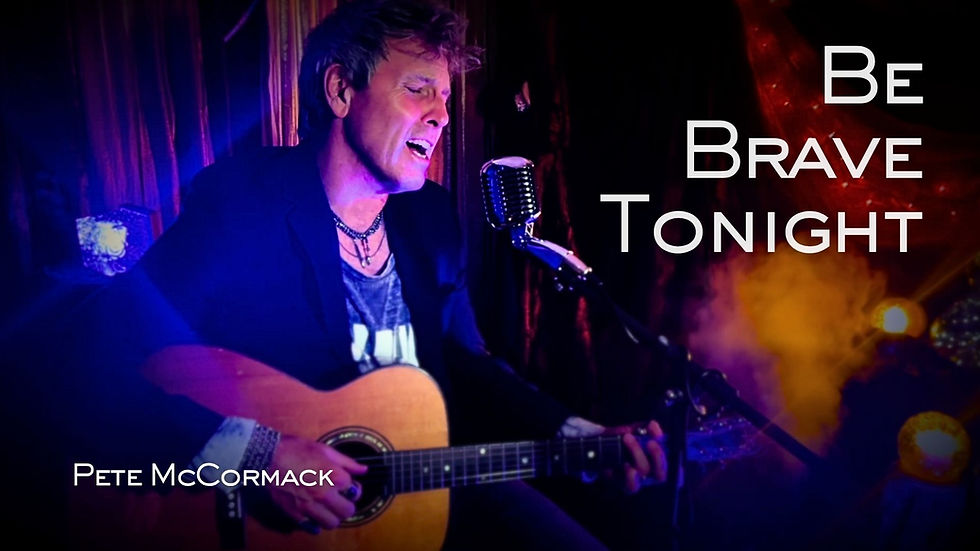
In 1998, a song I wrote called Be Brave Tonight was being pushed to be the end credit song for the Kevin Costner/Paul Newman/Robin Wright movie based on Nicholas Sparks’ bestselling novel Message in a Bottle. I loved all three of those actors—Costner was superb in JFK, Wright was heartbreaking and wonderful in Forrest Gump, and I’d been a massive fan of Paul Newman from the days of Cool Hand Luke and Butch Cassidy and the Sundance Kid. 


As for the song, I had recorded it a couple of years earlier in the home of the parents of a friend who were travelling and needed some vagabond to look after the place, and the dog, Spencer. A lovely house in the boonies, where the Manson Family might choose to come and kill you. Yes, I’m vulnerable to ridiculously paranoid thoughts—many that make it into my songs. 


Plus I get unnerved at night sometimes, when I’m alone in a house in the countryside, away from city crime. Who doesn’t? Those unfamiliar creaks and knocks double as footsteps, all set against the relentless roar of crickets, bullfrogs and wheezing psychopaths.


Anyway, the parents left for Thailand or Taiwan or Tunisia and I brought in $1,229.63 of rented recording equipment to make my second album—and drain my pitiful bank account. I lived off rhubarb pies in the freezer, fed Spencer the dog, and, feral as a ferret, recorded my face off with fantastic musicians dropping by to add magic. 


Put another way, to get this kind of opportunity—Hollywood, dammit!—for a song produced by me for 12 cents was encouraging. This was the same year the novel Understanding Ken came out for me, and I was in love with a proper English actress (who shared my mom’s maiden name), and spending months at a time in the dreamworld of LA, writing screenplays and songs and experiencing that ephemeral summer breeze of potential (blowing through the jasmine in my mind). 


Meanwhile, the music score for the film was not only in the delicate hands of Academy Award-winner Gabriel Yared (the composer of the profoundly lush The English Patient—far from my sensibilities), it was being mixed at Abbey Road Studios in London.


You read that right. Abbey Road Studios.


I wasn’t there—I wasn’t invited—but my song Be Brave Tonight was, and being played on some console that may have been used to record Here Comes the Sun, while Paul Newman acted on the screen above the console—or at least that’s how I picture it all going down, with the ghost of John Lennon digging it.


More importantly, the song meant a lot to me. It was written in a time of seeking and doubting and longing; about holding onto one’s soul despite our own limitations, not quitting on life, and not selling out—and not giving up even if you have sold out. The refrain was to anyone in crisis: “There is a call from the light / Be Brave Tonight.”


Then one afternoon Jim Wilson, the Oscar-winning producer of Dances With Wolves, who was also producing Message in a Bottle, called me from Abbey Road:


“Sorry Pete, Be Brave Tonight is not going to be in the film.” 


I was strangely not too beat up. The process itself had been fulfilling and I’ve always been resilient enough to never stop creating no matter how little (or how much) people care. Hell, I’m still on Facebook. And what a perfect song title with that news, right? Be Brave Tonight.


The best part was the reason why it didn’t make the film? A focus group brought in to judge the film, filled out their forms, and said the ending was way too depressing. All I knew was Kevin Costner’s character Garrett Blake died at the end of the film (spoiler!) and my song was playing as the credits rolled—so one of those two things had to go. It wasn’t going to be Kevin—even if he was dead.


Be Brave Tonight. You’re out. 


So whoever was in charge pulled the song and put in Gabriel Yared’s strings—or, I don’t know, a different song maybe. I’m not even sure if I saw the film. I’m not even sure how accurate this story is. But it’s close. And it is now the official story of Be Brave Tonight, a tender, pleading dirge with Aeolian pipes and a lot of heart, that carried on despite being rejected, and thus, had to live up to its name…


And here it is, calling from the light, through an older face, 28 years later … 


Updated: 2 days ago

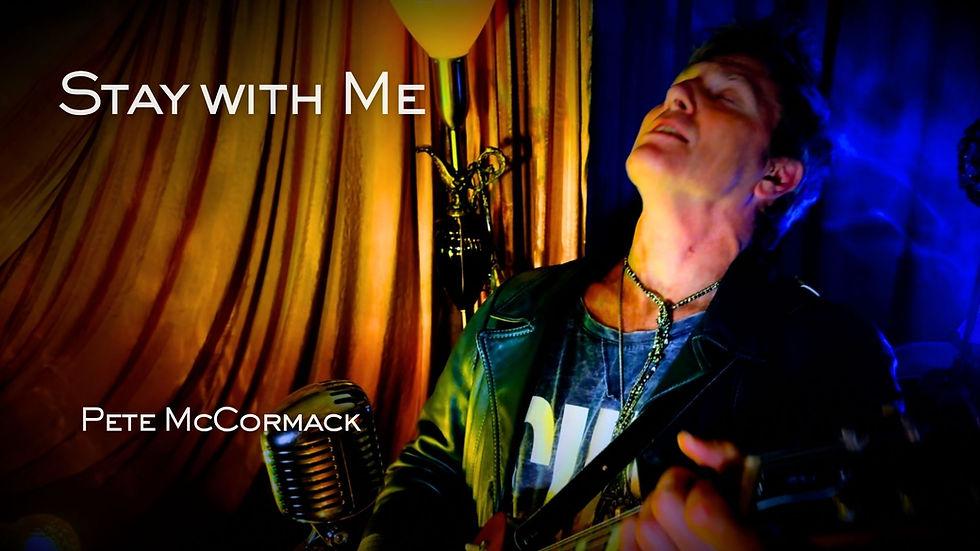
The dream continues in video form when you click or tap the image.


In 1994, as Grunge blew up in Seattle and the Gulf War exploded, I spent nearly all my money and gave all I had to make an independent CD. In the preceding years, after dropping out of university and picking up a guitar, I’d had a band called Oh Yeah—with great players I loved—and written a batch of songs that I naively hoped would connect with the world (or some part of it). My creativity reflected my brain and my soul, both being packed with big ideas and a blend of spirituality, politics and desire—and a bulging suitcase of neuroses that is to this day only partially unpacked.


Point of neurotic fact: I remain one of the few (maybe the only) lead singers in the annals of rock ’n’ roll history to not get laid over a three-year period as a live performer, touring and having a small fan base. I am uncertain what that says about me (or the music), but it does add resonance to the song you’re about to hear: Stay With Me.


Of all the songs, my gut said Stay With Me should be the first single. I produced it to make the poppiest pop I could pop, but still be original and cool.


But when the CD was finally pressed, a crisis of confidence, distraction and undeniable neuroses got in the way. More importantly, so did a stunning lack of marketing. Of those four things, only one do I not excel at. I simply didn’t get the CD out to record companies or even media.


I am undeniably a distracted, compulsive, creative soul—but not strategic. I was just then completing my first novel, which would also be published that year, and my brain was filled with new songs. Like a train-hopping vagabond, I had moved on.


All excuses aside, I present to you the video for Stay With Me—the video that should have been made in 1994 but had to wait until the spring of 2026, with a much older me trying to look cooler and less hairy than my back and nose care to admit.


The filmmaker, my dear friend, and dare I say huge fan of my music—the brilliant Gina Chiarelli—demanded we do videos for all of my songs. It's decades after some of these songs were written, but who could say no to the support and love? We’ve called it the Almost Live Sessions—a flurry of creative joy and experience. As of today, we have made little movies for 24 of my songs, past and present—the video series flickering on my site. It's worth checking out, even just to witness the late yet ongoing unfolding of another person's creative dreams and adventures, and perhaps remind you to get yours going.


So I give you Stay With Me.


But the power resides with you. Could Stay With Me have been a sleeper hit? A cult classic? A one-hit wonder? A big waste of marketing money? I don't know (or care), but my dreams from 1994 are, in 2026, in some wonderful way: in your hands… That gives me great joy.


Join our mailing list

© 2026 Pete McCormack      
bottom of page